No-Equipment Strength: The 30-Minute Bodyweight Blueprint
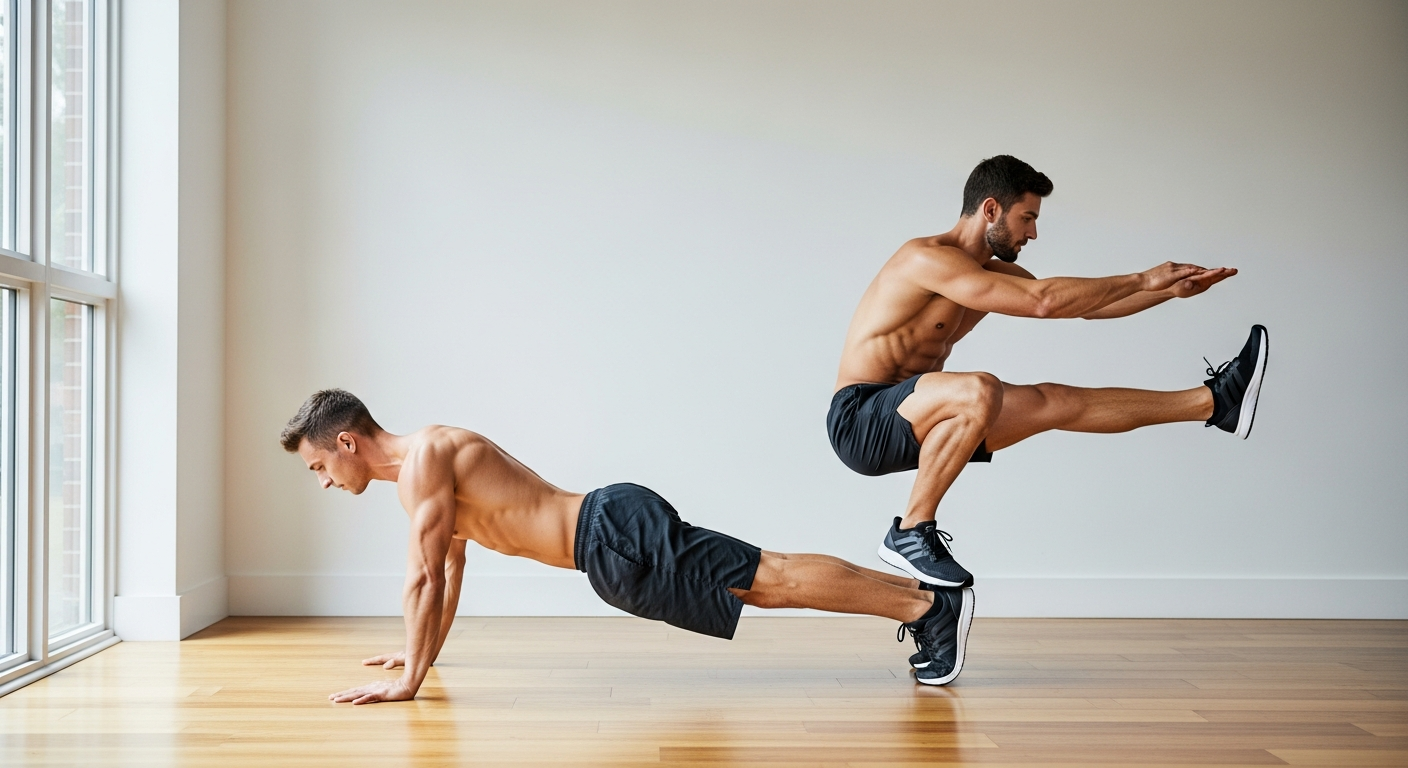
This article outlines a 30-minute bodyweight-only strength workout designed for athletes without access to equipment. The routine emphasizes tempo training and time under tension to build muscle and structural integrity. It features a dynamic warm-up, a high-tension strength circuit focusing on controlled eccentrics, and a high-intensity 7-minute finisher to maximize caloric burn and cardiovascular health.
In a fitness landscape often dominated by barbells, dumbbells, and complex machinery, it's easy to overlook the most powerful and accessible tool for building strength: your own body. You don't need a fully-equipped gym to forge a robust, resilient physique. In fact, some of the most effective training can be done with zero equipment, right in your living room or a small patch of grass. This article unveils a potent 30-minute bodyweight strength workout, a no-equipment routine meticulously designed to challenge your muscles, enhance your endurance, and redefine what "strong" means to you. Prepare to tap into your innate power, focusing on precision, control, and the incredible potential of time under tension to build functional armor from the ground up.
The Philosophy Behind No-Equipment Strength Training
A common misconception in the fitness world is that you need a barbell and a rack of plates to build true strength. While external load is a powerful tool, your own body weight is the most versatile piece of equipment you own. Building strength without weights requires a fundamental shift in focus: instead of adding pounds, we increase the challenge by manipulating variables like leverage, stability, and crucial elements like Time Under Tension (TUT).
Mastering Time Under Tension (TUT)
Time Under Tension (TUT) refers to the total amount of time a muscle is actively working during a set. When external weights are absent, maximizing TUT becomes your primary lever for progressive overload. By slowing down the eccentric (lowering) phase of an exercise, pausing at the point of greatest challenge, and maintaining strict control throughout, you force your muscle fibers to stay engaged for longer periods. This extended engagement leads to greater muscle fiber recruitment, increased metabolic stress, and ultimately, superior strength gains and hypertrophy (muscle growth). It's about quality over quantity, making every single repetition count.
The Power of Body Geometry
Another powerful principle in bodyweight training is the strategic use of body geometry. By adjusting your body position, limb placement, or range of motion, you can significantly alter the difficulty of an exercise. For instance, elevating your feet during push-ups increases the load on your upper body, while bringing your hands closer together intensifies tricep engagement. Similarly, performing single-leg squats (pistols) instead of bilateral squats drastically increases the demand on balance, stability, and unilateral leg strength. This workout strategically employs these principles to ensure maximum effectiveness within a compact timeframe.
The "Bodyweight Blueprint" Workout: Your 30-Minute Routine
This 30-minute session is specifically designed to build "functional armor" by slowing down movements, demanding total-body control, and maximizing your body's natural strength potential. It’s a comprehensive routine that hits every major muscle group, boosts your cardiovascular health, and hones your mental fortitude.
Total Time: 30 Minutes
Focus: Absolute Strength, Midline Stability, and Eccentric Control
1. Dynamic Warm-Up (5 Minutes): Preparing for Peak Performance
Goal: Lubricate the joints, activate the core, and prepare your nervous system for the work ahead. A proper warm-up prevents injury and optimizes performance by increasing blood flow to the muscles and improving joint mobility.
Perform 2 Rounds of:
10 World’s Greatest Stretches: This multi-faceted stretch targets the hips, hamstrings, glutes, and thoracic spine. Start in a deep lunge, then place the hand opposite your front leg on the floor, twisting your torso to raise the other arm towards the ceiling. Focus on opening up your chest and hips.
15 Air Squats: Focus on sitting back into the heels as if reaching for a chair, keeping your chest up and core engaged. Aim for hip crease below knee level. This primes your lower body for the strength work.
10 Scapular Push-ups: Get into a plank position. Keeping your arms straight, depress and retract your shoulder blades, allowing your chest to drop slightly towards the floor. Then push back up, protracting your shoulder blades. This movement strengthens the muscles surrounding your shoulder blades, crucial for shoulder health and stability in push-ups.
30 Seconds Plank: A foundational core exercise. Maintain a straight line from head to heels, squeezing your glutes and bracing your core. Avoid sagging hips or piking your butt too high. This activates your entire midline.
2. Strength Component: The "Slow-Mo" Circuit (15 Minutes) – Building Resilient Muscle
Goal: Muscle recruitment through tempo and extended time under tension. This circuit is where the magic of bodyweight strength truly shines, forcing your muscles to work harder and longer.
Perform 4 Rounds. Rest 60 seconds between rounds.
Tempo Air Squats: Foundation of Lower Body Power
10 Tempo Air Squats: (5 seconds down, 2-second pause at the bottom, explosive up). The extremely slow eccentric phase (5 seconds) places immense stress on your quadriceps, hamstrings, and glutes, enhancing muscle fiber recruitment and control. The 2-second pause at the bottom eliminates the stretch reflex, forcing your muscles to generate force from a dead stop, building raw strength. Explode up to engage fast-twitch muscle fibers. Focus on maintaining perfect form throughout the slow descent and pause.
Tempo Push-ups: Upper Body & Core Mastery
10 Tempo Push-ups: (3 seconds down, 1-second pause with chest an inch off the floor, explosive up). This tempo variation dramatically increases the time your chest, shoulders, and triceps are under tension, leading to greater strength and endurance. The 1-second pause at the bottom challenges your stability and ability to generate power from a disadvantaged position. Keep your core tight and body in a straight line. Scale to knees or an elevated surface (like a sturdy bench or counter) if needed, ensuring you maintain the tempo. For an added challenge, try placing your hands closer together.
Alternating Reverse Lunges: Unilateral Strength & Balance
12 Alternating Reverse Lunges: (Focus on a 3-second descent for each leg). Lunges are excellent for building unilateral (single-leg) strength, which translates to better balance, stability, and athletic performance. The controlled 3-second descent intensifies the work on your glutes, hamstrings, and quads, improving joint stability around the knee and hip. Step back, lower until both knees are bent at approximately 90 degrees, ensuring your front knee doesn't go past your toes, and then push through your front heel to return to standing. Alternate legs for a total of 12 repetitions.
Hollow Body Hold: The Ultimate Midline Stabilizer
30-Second Hollow Body Hold: This is a cornerstone exercise for core strength, crucial for all athletic movements. Lie on your back, extend your arms overhead and legs straight. Lift your shoulders and legs off the floor, keeping your lower back glued to the floor. The closer your arms and legs are to the floor, the harder it becomes. This isometric hold builds tremendous midline stability and endurance, protecting your spine and improving power transfer in other exercises.
3. The Finisher: High-Intensity MetCon (7 Minutes) – Igniting Your Metabolism
Goal: High-power output and cardiovascular "burn." This intense metabolic conditioning segment elevates your heart rate, improves endurance, and maximizes caloric expenditure in a short burst. It's designed to push your limits and leave you feeling accomplished.
AMRAP 7 (As Many Rounds As Possible in 7 Minutes):
10 Burpees: The ultimate full-body conditioning exercise. From standing, drop to the floor, chest to deck, then explosively jump your feet back under you and leap vertically, clapping overhead. Focus on fluidity and power. This movement taxes your cardiovascular system and every major muscle group.
15 Butterfly Sit-ups: Lie on your back with the soles of your feet together and knees out to the sides. Reach your hands behind your head, then sit up powerfully, touching your hands to the floor in front of your feet. This engages your entire abdominal wall and hip flexors, promoting a full range of motion.
20 Mountain Climbers (Total): Start in a plank position. Alternately drive your knees towards your chest in a running motion. Keep your hips low and core engaged. This is a dynamic core exercise that also provides a significant cardiovascular challenge, mimicking a sprint without impact.
4. Cool-Down (3 Minutes): Restoring and Recovering
Goal: Down-regulate your nervous system, reduce muscle soreness, and improve flexibility. A proper cool-down is just as important as the warm-up for recovery and long-term mobility.
1 Minute Upward Dog: Lie on your stomach, place your hands under your shoulders, and press up, extending your arms and lifting your chest off the floor. Keep your hips on or slightly off the floor, stretching your abdominals and chest. This helps counteract the anterior dominant movements from the workout.
1 Minute Couch Stretch (Per leg): Kneel in front of a wall or sturdy object. Place one foot up against the wall, knee on the floor. Step the other foot forward into a lunge. Gently push your hips forward to feel a deep stretch in the quad and hip flexor of the back leg. Hold for 1 minute per leg. This is crucial for improving hip mobility and alleviating tightness from squatting and lunging.
Why Tempo Training is Your Secret Weapon for Bodyweight Strength
When you don't have a 100kg barbell, you must make the 80kg of your own body feel heavier. Tempo training is not just about slowing down; it's a sophisticated method of maximizing muscular engagement and adaptation. By using a 5-second eccentric (lowering) phase, you force your muscle fibers to stay engaged longer, leading to greater hypertrophy (muscle growth) and neurological strength gains. Here's a deeper dive into why tempo training is so effective:
Increased Time Under Tension (TUT): As discussed, longer TUT directly correlates with more muscle damage (the good kind that leads to growth) and metabolic stress, both key drivers of hypertrophy.
Enhanced Muscle Control and Form: Moving slowly forces you to be hyper-aware of your body's position and movement patterns. This precision helps ingrain correct form, which is vital for preventing injuries and ensuring you're targeting the intended muscles effectively.
Eccentric Strength Development: The eccentric phase of a movement is when the muscle lengthens under tension. Our muscles are actually stronger eccentrically than concentrically (when they shorten). By emphasizing the eccentric phase, you build incredible resilience and strength, which translates to better performance in lifts and reduced risk of injury.
Improved Mind-Muscle Connection: Slow movements allow you to truly focus on the muscle contracting and lengthening. This heightened awareness, known as the mind-muscle connection, can significantly boost the effectiveness of your training.
Overcoming Sticking Points: By pausing at the most challenging points of a movement (like the bottom of a push-up or squat), you train your body to generate force from a "dead stop," improving your ability to power through sticking points in other exercises.
Neurological Adaptations: Tempo training challenges your nervous system to coordinate muscle actions more efficiently. This leads to better motor unit recruitment and overall strength improvements that aren't solely dependent on muscle size.
This workout proves that intensity is a choice, not just a number on a plate. By mastering tempo, you unlock a new dimension of strength, control, and muscular development using only your body.
Beyond the Blueprint: Sustaining Your Bodyweight Journey
This 30-minute bodyweight strength workout is a powerful starting point, but the journey to sustained strength and fitness is ongoing. Here's how to continue progressing:
Progressive Overload Without Weights
The principle of progressive overload — continually challenging your muscles to adapt — is just as vital in bodyweight training as it is with weights. To progress, you can:
- Increase Repetitions: Once you can comfortably hit the prescribed reps with perfect form, try adding 1-2 more reps per set.
- Increase Rounds: If time allows, add an extra round to the strength circuit.
- Decrease Rest Time: Shorter rest periods between sets or rounds will increase the metabolic demand.
- Manipulate Tempo: Further slow down the eccentric phase or extend the pause at the bottom.
- Advanced Variations: Once tempo push-ups become easy, progress to incline push-ups with feet elevated, or even single-arm push-ups. For squats, work towards pistol squats.
- Add Unilateral Movements: Incorporate more single-limb exercises to increase difficulty and address muscular imbalances.
Consistency and Mental Fortitude
The most effective workout is the one you stick to. Consistency is paramount. Aim to perform this or a similar bodyweight routine 3-4 times per week, allowing for rest and recovery. Bodyweight training also builds incredible mental fortitude. The discipline required to maintain slow tempos, push through high-intensity finishers, and master complex movements without external assistance strengthens your willpower and focus, qualities that extend far beyond your workout.
Frequently Asked Questions
Q: How often should I perform this 30-minute bodyweight strength workout?
A: For optimal results and recovery, aim to perform this 30-minute bodyweight strength workout 3-4 times per week, allowing at least one rest day between sessions. This gives your muscles adequate time to recover and rebuild stronger.
Q: Can I modify the exercises if they are too difficult or too easy?
A: Absolutely! All bodyweight exercises can be scaled. For example, if tempo push-ups are too difficult, perform them on your knees or with your hands elevated on a sturdy surface. If they're too easy, try elevating your feet or moving your hands closer together. For squats, reduce the pause or tempo if needed, or progress to single-leg variations. Listen to your body and choose variations that challenge you while maintaining good form.
Q: What if I don't have exactly 30 minutes?
A: While this routine is optimized for 30 minutes, you can adjust it. If you have less time, you could shorten the warm-up to one round, reduce the strength circuit to 3 rounds, or even just focus on the finisher. If you have more time, you could add an extra round to the strength component or extend your cool-down stretches. The key is to maintain the intensity and focus on quality movements.
Q: Is bodyweight training enough to build significant muscle?
A: Yes, absolutely! Bodyweight training, especially when incorporating principles like Time Under Tension, tempo, and progressive variations, is highly effective for building muscle mass (hypertrophy) and strength. Many elite gymnasts, for example, build incredible physiques and strength primarily through bodyweight exercises. The key is to continually challenge your muscles as they adapt.
Q: How can I track my progress with bodyweight workouts?
A: You can track your progress by noting down the number of rounds completed in the AMRAP finisher, the strictness of your tempo, the number of reps you achieve in the strength circuit, or even the difficulty of the variations you can perform (e.g., progressing from knee push-ups to regular push-ups). Keeping a workout journal is an excellent way to see how far you've come.
Ready to Elevate Your Training?
This 30-minute bodyweight strength workout is just one example of the incredible variety and effectiveness of no-equipment training. If you enjoy the structure of this session but want to mix up your movements daily, or explore routines with specific equipment, check out MetCon Planner. Instantly generate new bodyweight or equipment-based routines tailored to your needs. Start planning smarter, not harder, and unlock your full potential today: MetCon Planner